Getting a home ready for winter: an autumn checklist
The Abimeister team · Updated · 3 min read
An Estonian winter finds every weakness. An autumn inspection takes an afternoon and heads off exactly the problems that get more expensive in the cold — because in January no job is easy any more.
Water: the most expensive single risk
Outside taps and garden hoses have to be drained before the first frost. Water left in the pipe expands and splits the joint; that is usually discovered in spring, when the supply is turned back on and the cellar fills.
In a summer house or an unheated building the whole system has to be drained, not just the tap closed. If you are not sure every pipe is empty, have it checked — one visit is cheaper than one burst pipe.
- Outside taps drained and isolated
- Garden hoses disconnected and stored
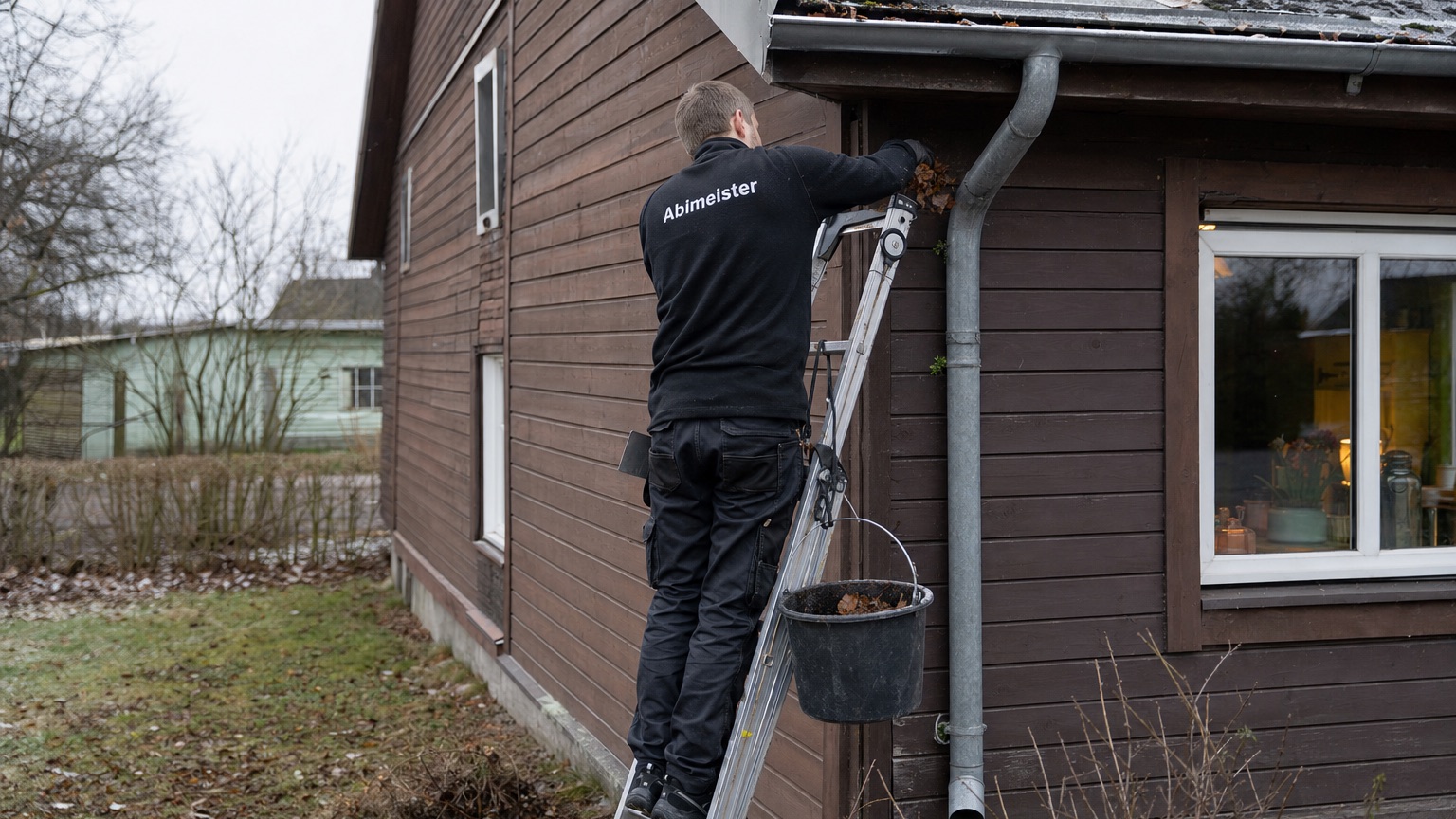
- Gutters and downpipes cleared
- Roof and plinth checked where water collects
- Heating system bled and the pressure checked
Heat: windows, doors and heating
Set PVC windows to their winter pressure. It is a minute per window with an allen key and cuts the draught immediately — on most windows it has never been done.
Check the door seals: press the rubber with a finger and see whether it springs back. If it does not, the seal has hardened and leaks. A new seal costs little and is the fastest way to cut heat loss.
Bleed the radiators before the heating season, not in the middle of it. Cold at the top and warm at the bottom means air; five minutes with a key and a bowl.
Outside and safety
Clear the gutters before the leaves freeze in them. A blocked gutter means icicles and water against the plinth — two things that cost more than the cleaning did.
Test the smoke alarm and change the battery. The heating season is when it matters most and when fewest people check it.
If something has already happened: first steps
With a frozen pipe the first step is to shut the water off, not to start thawing. If the pipe has already split you will only find out when the ice melts, and by then the water is in the flat. Close the stopcock, open a tap below the freeze, and only then apply heat — slowly, with a hairdryer or a warm cloth, never a naked flame.
Ice falling from the roof and icicles are the housing association's responsibility, not an individual flat's. Report it to the manager in writing and take a photo: if something happens, that photo is the only evidence the problem was reported.
If the heating fails completely, check three things before calling: whether the boiler pressure is normal, whether the circulation pump runs, and whether the thermostat battery is flat. The last is surprisingly common and the fix costs two euros.
- Frozen pipe: shut the water off before thawing
- A leak: close the stopcock, then photograph the damage for the insurer
- Icicles: report to the association in writing, do not climb up yourself
- No heating: pressure, pump, thermostat battery — in that order
- Power cut: check whether the neighbours have power
An autumn inspection costs one hour of labour. A January emergency costs five times that, and comes at a bad moment.