Mould in the bathroom: the cause is almost always ventilation
The Abimeister team · Updated · 3 min read
Mould is not a question of cleanliness. It grows where moisture stays on a surface long enough — and in a bathroom only one thing decides that: how fast the air changes. Before cleaning anything, check that.
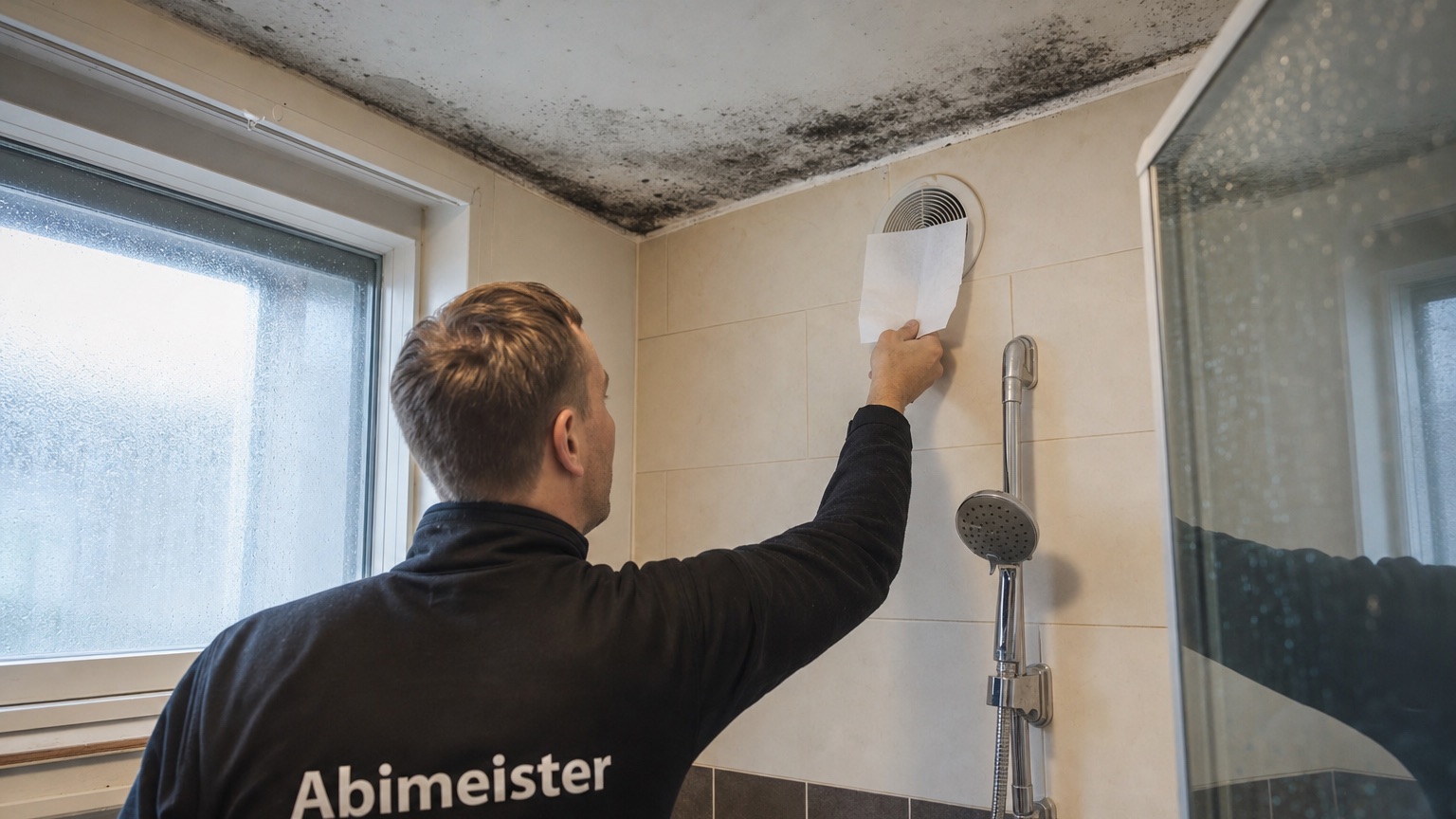
Test the ventilation with one sheet of paper
Hold an A4 sheet against the bathroom extract grille. If the extract works, the sheet sticks. If it falls, the duct is not pulling — and then neither silicone nor cleaner will achieve anything.
If the sheet does not stick there are three usual causes: the grille is choked with dust, the duct is blocked, or the bathroom door seals so well that no air can get in. The last is very common with new doors and the fix is simple: a 15–20 mm gap under the door, or a vented grille in it.
- The grille is clean and clear
- Paper test: the sheet sticks to the grille
- There is an air gap under the door, or a vented door
- After showering the door is left open or the extract runs 15 min
- There is no permanent condensation on the window
What to actually do about the mould
Mould inside a silicone joint does not clean out, because the growth is inside the material rather than on it. The only working answer is to cut the joint out and replace it — and that is only worth doing once the ventilation works.
Mould on a wall or ceiling surface can be removed, but if the cause remains it is back within three months. If it is inside the plaster and returns even after proper cleaning, the problem is moisture in the wall, not on it.
What is different in an apartment block
In panel blocks the ventilation is a shared riser, and fitting a powerful extract fan in one flat can affect the neighbours — at worst it pulls their air into your flat. That is worth agreeing with the association rather than deciding alone.
If the whole building's ventilation is blocked, the answer is cleaning the riser, which is the association's job. A single flat cannot solve it alone, and it is usually why mould appears in several flats at the same time.
Keeping a bathroom dry day to day
Once the ventilation works, daily habit decides the rest. Two minutes after a shower does more than any cleaning product: squeegee the glass and the tile and leave the door open. Water that does not sit on a surface never gets to feed mould.
The second habit is drying towels elsewhere. Wet towels in the bathroom hold the humidity up all day and make the ventilation work twice as hard. A drying rack in the kitchen or on the balcony solves more than a new fan.
In winter there is an additional cause: a cold external wall. If the mould always appears in the same corner and not near the shower, this is not a water problem but a cold bridge. Neither ventilation nor silicone fixes that — insulating the wall does, and it is worth knowing before you repaint it a third time.
- Squeegee the glass and tile after showering
- Leave the door open for twenty minutes afterwards
- Dry towels outside the bathroom
- Repeat the paper test on the extract once a quarter
- If the mould is always in the same corner, suspect a cold bridge
The paper test costs nothing and tells you whether the next step is cleaning or a tradesman.