A bathroom renovation checklist
The Abimeister team · Updated · 3 min read
Bathroom renovations get expensive when something has to be redone. Almost every redo comes from a decision that was not made before the first blow — here are those decisions, in order.
Decide before the strip-out
Where do the toilet and the shower go? Moving a waste is limited in a panel block — there is not much depth between floor and ceiling for a fall. Ask about that before you plan from Pinterest images.
Bath or shower enclosure? This is not only taste: an enclosure needs a fall in the floor and usually a larger tanked area, while a bath is simpler and cheaper. Decide first, because the floor build-up depends on it.
- Sanitaryware positions and what the waste run allows
- Bath or shower enclosure
- Underfloor heating: yes or no (adding it later means a new floor)
- Access panel to the concealed frame and the riser
- Ventilation: does the existing extract actually work
Tanking and ventilation decide how long it lasts
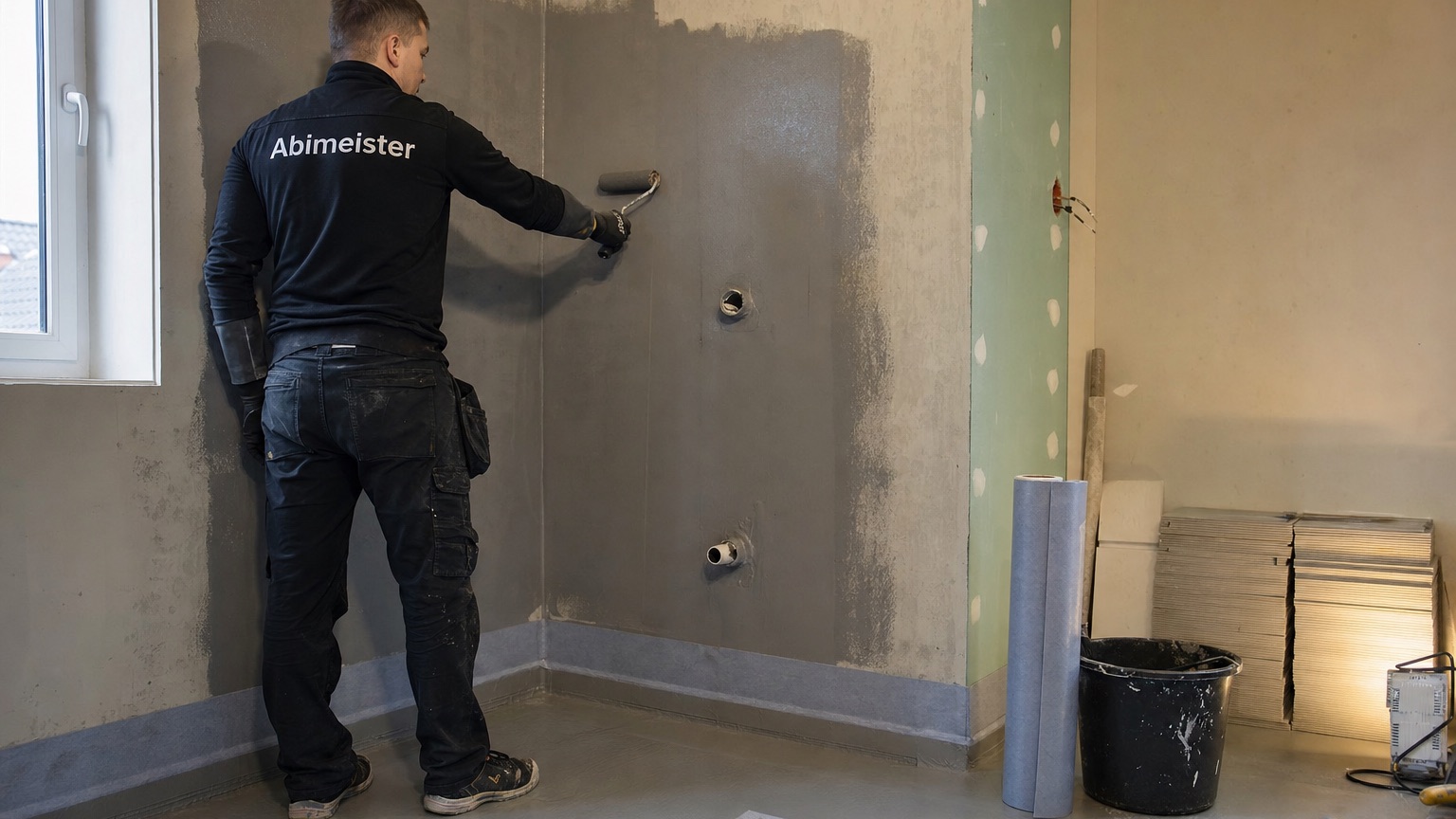
Tanking is not optional and moisture-resistant plasterboard does not replace it. In the shower area it has to cover the floor and the wall to full shower height; elsewhere at least 20 cm up from the floor. It is trivial in material cost and the single biggest thing in the whole job for avoiding later damage.
Ventilation is the other half of the same problem. If the bathroom extract does not pull — test it with a sheet of paper, which should stick to the grille — no amount of silicone will keep mould away. Fix it before tiling, not after.
Quantities and schedule
Buy tiles with 10% spare for a straight layout and 15% for diagonal or herringbone, all from one batch — shade varies visibly between batches and you cannot see it in the shop.
For the schedule, allow for curing: tanking wants 24 hours, tile adhesive 24 hours before grouting, grout 24 hours before use. Three weeks for a 4 m² bathroom is normal; two weeks usually means one of those stages was cut short.
Where the money in a bathroom actually goes
Most people assume the tiles are the biggest cost. In a typical 4 m² bathroom the tiles are a small share — around a tenth — and two thirds of the total is labour. That is why choosing a cheaper tile barely moves the final figure, while reducing the amount of work moves it immediately.
The second surprise is the strip-out and the waste. Removing the old bathroom, the skip and the disposal are typically a tenth of the budget, and almost impossible to avoid, because tanking cannot go over old tile.
Where you can genuinely save: keeping the existing layout. Every pipe and waste that moves adds a working day and sometimes opening a ceiling. The same bathroom in the same layout usually costs a fifth less than the same bathroom with the WC moved.
- Labour across the whole job: roughly 60–65% of the total
- Sanitaryware and taps: 10–15%
- Tiles and grout: 8–12%
- Strip-out, skip and disposal: around 10%
- Tanking, adhesive and fixings: 5%
The only decision you cannot change later is the one that ends up under the tile. Everything else can be swapped.