Painting walls, step by step
The Abimeister team · Updated · 3 min read
Getting the paint on the wall is the easy part. Everything that decides the result happens first: cleaning, filling, sanding and priming. This guide follows exactly that order.
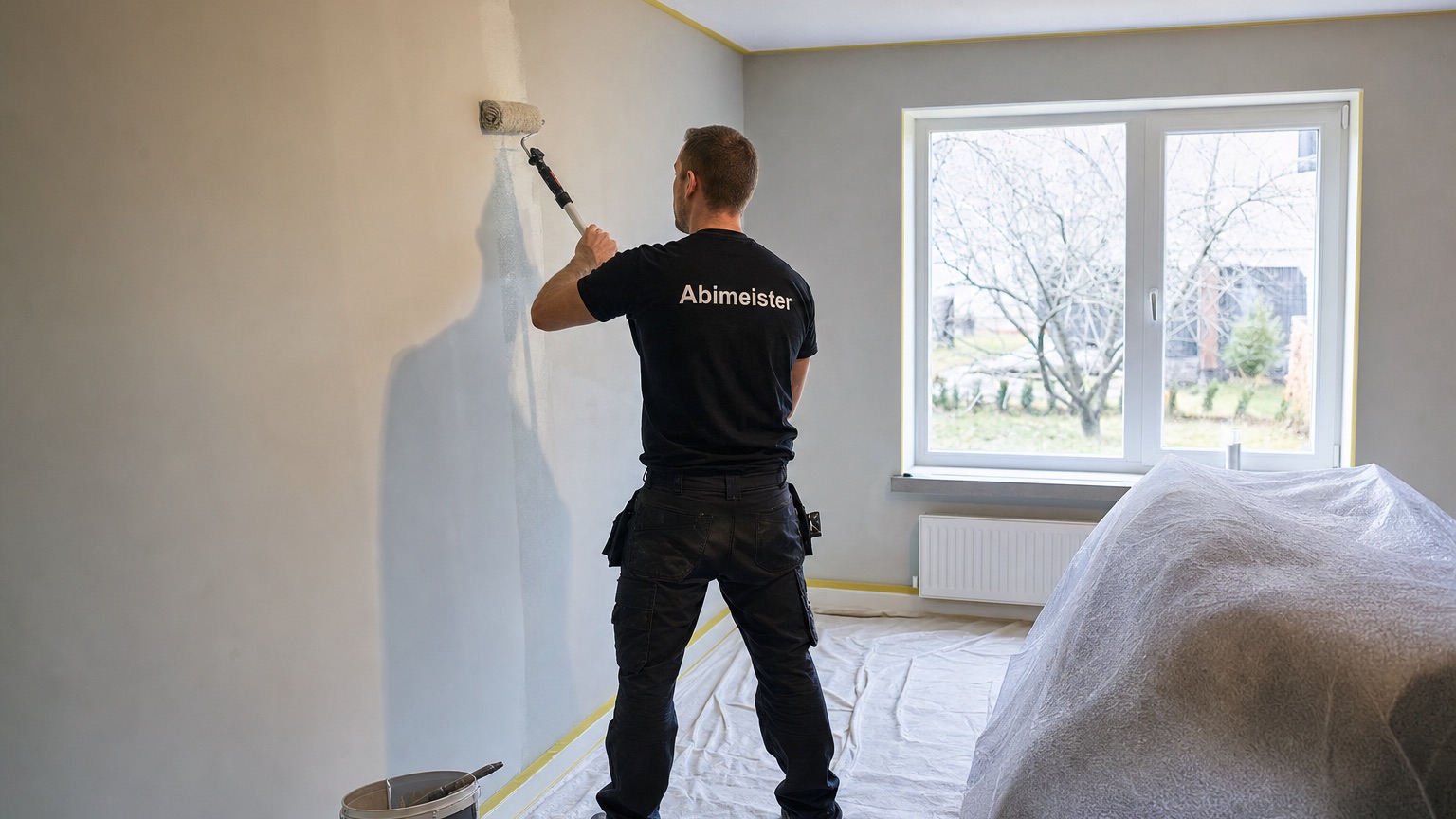
The preparation you cannot skip
Wash the wall. Kitchens have grease, living rooms have dust, and everywhere there are patches paint will not bond to. A weak detergent solution and a cloth is enough; the important part is letting it dry.
Fill the holes and cracks, then sand. Sand with a vacuum-extracted sander, or at least follow up by hand with a damp cloth — sanding dust left on the wall is why paint peels later.
Primer is not optional on new filler, plasterboard or a strongly absorbent surface. Without it the wall drinks the first coat and you paint three times where two would have done.
Choosing the paint and applying two coats
Matt hides unevenness; a soft sheen takes washing. In a kitchen or a child's room choose something washable, in a bedroom the deeper tone of a matt. For a bathroom buy paint made for wet rooms, not a 'moisture resistant' label on ordinary paint.
Two coats is the norm, and they cannot be traded for one thick one. The first coat binds the surface, the second gives the colour. Leave 4–6 hours between them; rushing pulls the first coat open and you get streaks.
- Wash and let dry
- Fill, sand, and wipe off the dust
- Prime the whole surface
- Cut in the edges with a brush
- Roll the first coat, wait 4–6 h, then the second
Three mistakes that show up in daylight
First: working the roller too dry. When the roller starts to rasp, the paint has run out and the surface will be patchy. Reload more often.
Second: cutting in too far ahead. Cut in and roll within the same coat, not a day apart — otherwise the brush texture reads differently from the rolled surface.
Third: pulling the masking tape off dry paint. Pull the tape while the paint is still damp, at 45 degrees. Dry paint tears with the tape.
How much paint, and how long it takes
Paint is calculated from wall area, not floor area. A living room in a two-bedroom flat, 18 m² of floor, means about 45 m² of wall and 18 m² of ceiling. One litre covers roughly 8–10 m² in one coat, so two coats for that room take about 12 litres.
Buy one tin too many rather than one too few, and all from one batch. The same colour from different batches differs visibly, and touching in half a coat later shows in every raking light.
The schedule is simple: one room is one day when the preparation is light, two days when the walls need filling. A three-room flat is typically four to five working days — and the first of them is always preparation, not painting.
- Wall area = room perimeter × ceiling height, less doors and windows
- Coverage per coat: 8–10 m² per litre
- Always two coats, so double it
- Add 10% spare and buy from one batch
- One room: one day; two with filling
If the result looks patchy, the paint is not the problem — the primer that was never applied is.