A dripping tap: what to do yourself and when to call
The Abimeister team · Updated · 3 min read
Taps drip for three reasons: a worn cartridge, a failed seal, or excessive water pressure. Before taking anything apart, spend five minutes working out exactly where the water is coming from — that decides whether this is a ten-euro problem or a hundred-euro one.
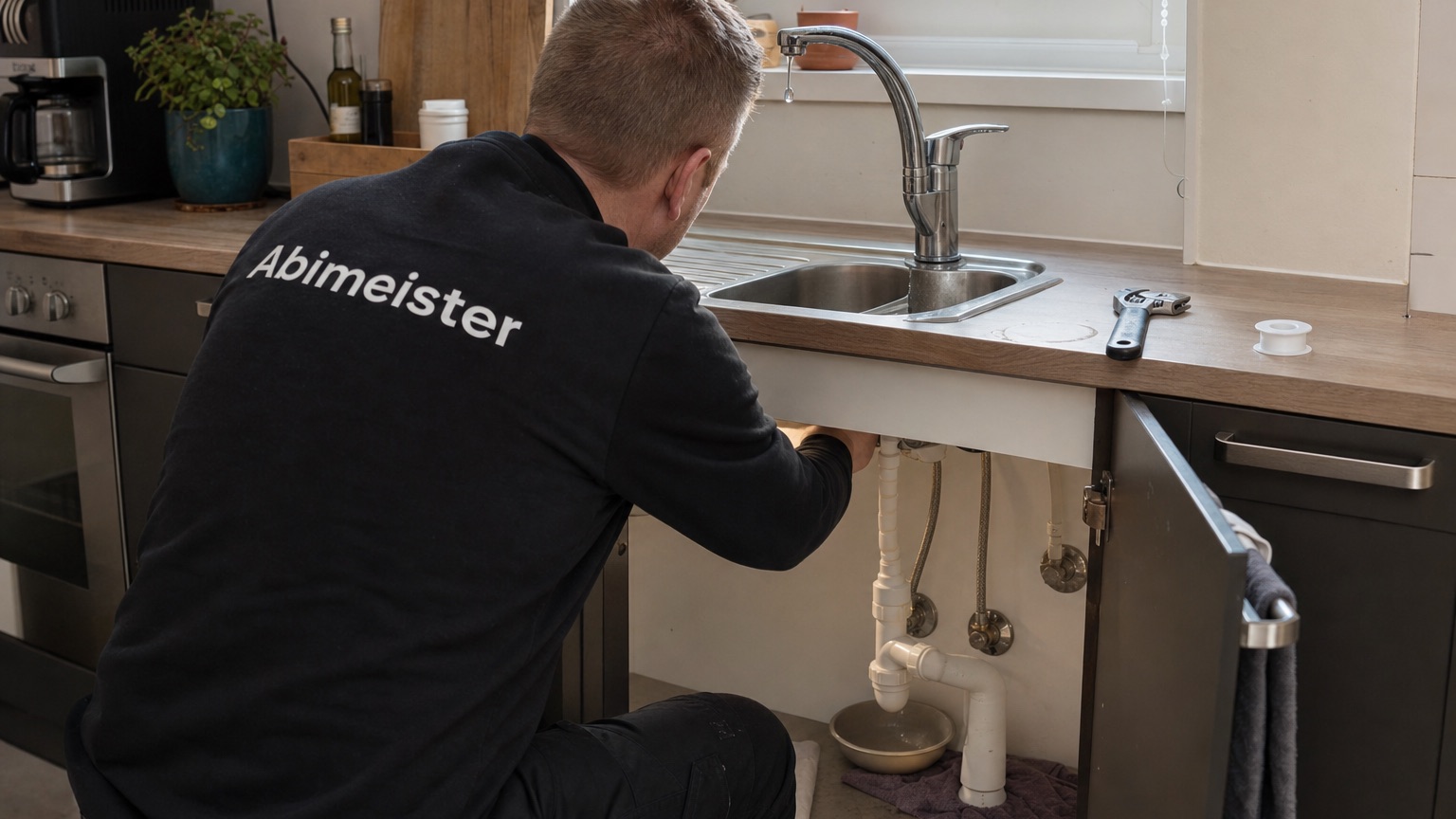
Find the leak first
If water drips from the spout while the tap is closed, the cartridge or an internal seal is at fault. If it seeps from under the tap onto the basin, a connection or the base gasket has gone. If the bottom of the cabinet is wet, the leak is in a flexible hose or an angle valve — and that is the urgent one, because it leaks constantly rather than only in use.
Dry everything and put a paper towel at each suspect point. Half an hour later it is obvious where the water comes from; without that, the wrong thing usually gets dismantled.
What you can do yourself
Cleaning the aerator (the mesh at the end of the spout) is a five-minute job and solves a surprising share of 'low pressure' complaints. Unscrew it, soak it in vinegar and put it back.
Changing the cartridge in a single-lever mixer is within reach if you have an allen key and patience: close the angle valves, drain the water, remove the cap, screw and lever, then swap the cartridge. It has to be exactly the right size — photograph the old one and take it to the shop.
- Always close the angle valves first and check the water really stops
- Block the basin waste so a screw cannot fall down it
- Photograph each step on your phone as you dismantle
- Do not force anything: a ceramic cartridge cracks
When replacing beats repairing
If the tap is more than ten years old, finding the cartridge is often harder than buying a new tap. On a budget tap the cartridge costs nearly as much as a whole new mixer.
If the angle valve no longer shuts off, this has stopped being tap work — it is plumbing, and not worth attempting yourself, because the next step is the flat's main stopcock and then the whole building is without water.
What to buy if you are doing it yourself
People make two mistakes at the shop. The first is buying a tap without checking the reach: a kitchen spout has to reach the middle of the bowl, or the water splashes off the edge. Measure the bowl width and the reach you need beforehand, not afterwards.
The second is forgetting the angle valves. If they are old and seized you cannot fit the new tap at all, because the water will not turn off. Two valves cost under ten euros together and get changed at the same time as the tap — doing it separately later means another visit.
The third thing nobody buys: PTFE tape and new flexible hoses. Old hoses are not worth reusing; the rubber inside ages even when the outside looks fine.
- A tap whose spout reaches the middle of the bowl
- Two angle valves, 1/2 inch
- New flexible hoses of the right length
- PTFE tape for the threads
- An adjustable spanner and a cloth so the chrome does not scar
A dripping tap is rarely urgent but always expensive: three drips a second is roughly 100 litres a week.