How to choose a handyman and not regret it
The Abimeister team · Updated · 3 min read
Most bad experiences with a tradesman do not start with bad work — they start with a vague agreement. When the price, the scope and the timing are all spoken and approximate, both sides end up right. These seven questions take five minutes and head off most disputes.
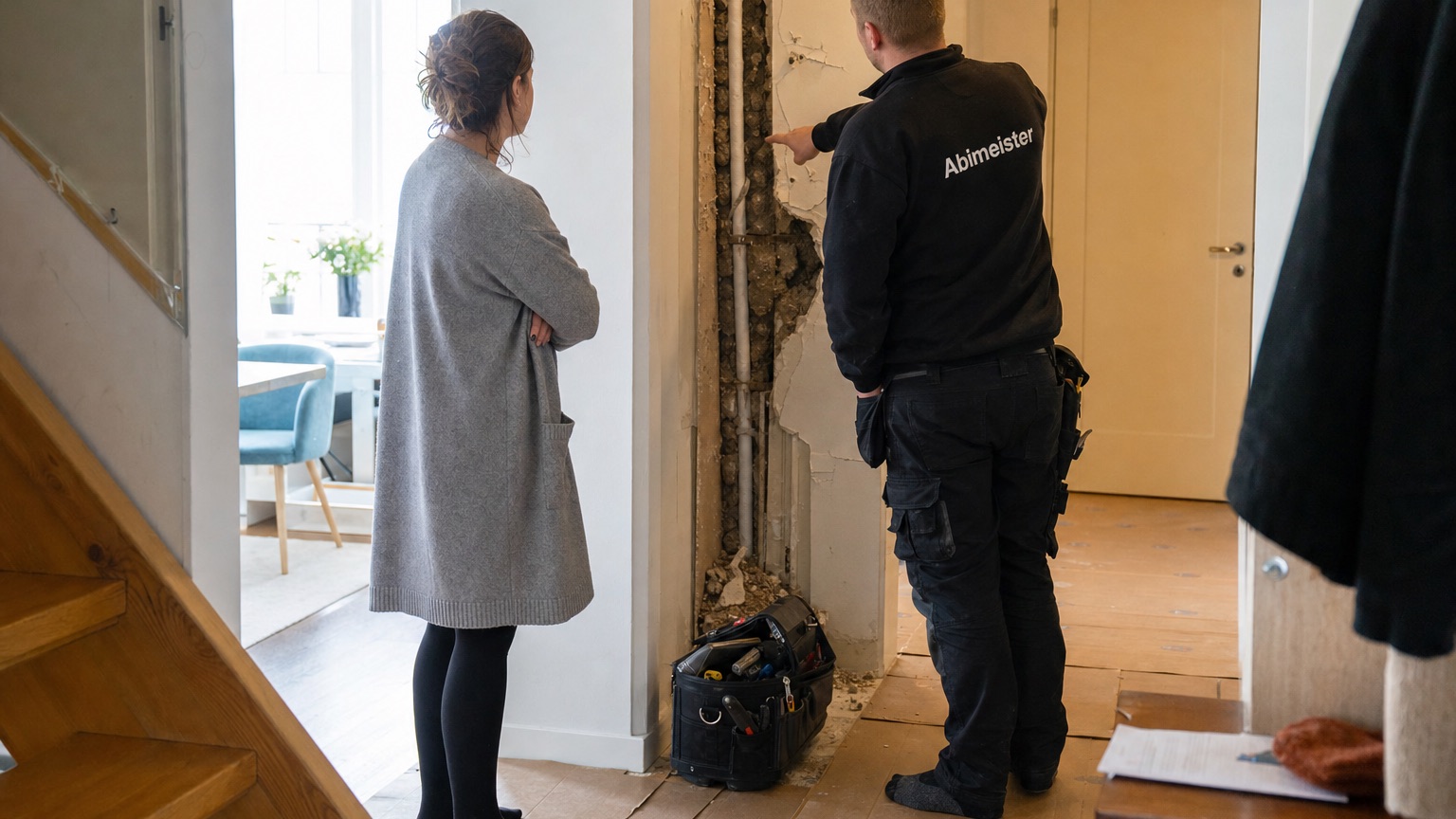
Ask for a price with a unit, not just a number
'About two hundred' says nothing. Ask whether that is per hour or for the job, how many hours are assumed, and what happens if it runs longer. A decent tradesman answers without hesitating, because he has worked it out for himself anyway.
Materials need a separate conversation. Are they included? Who buys them? Is there a handling fee? A 10% markup on materials the tradesman buys is normal in Estonia and it is honest — it pays for his time in the shop, not a hidden margin.
Three warning signs worth taking seriously
First: a deposit of more than 30% before anything has been done. An advance for materials is normal; the whole sum up front is not.
Second: refusing to put the quote in writing. Even a short email with a list of tasks is enough, and nobody serious refuses.
Third: a price substantially below the others. Hourly rates in Estonia sit in quite a narrow band; a quote at half the price usually means something will not be done, or the person doing it is not the person who promised.
- Do you issue an invoice, and is the business registered?
- Is there a guarantee on the work, and for how long?
- Do you carry liability insurance?
- Who cleans up and who removes the waste?
- What happens if something unexpected turns up mid-job?
Compare quotes on the same scope
Two quotes are comparable only if they list the same work. The commonest mistake is comparing a quote that includes waste removal and materials with one that does not — the gap can be a third of the total.
Ask both for an itemised list. That is not rude; it is exactly what any serious tradesman prefers too, because then there is no later argument about what was agreed.
A written agreement fits in one email
A contract does not need a lawyer. A three-sentence email that both sides have answered 'agreed' to is a perfectly valid agreement in Estonia, and it settles 90% of later disputes. What matters is that four things are in it: what will be done, what it costs, when it starts, and what the guarantee is.
Write it yourself if the tradesman does not. Most are glad of it — they do not want to argue about whether painting the front door was in the price either. If someone refuses to confirm anything in writing, that refusal is itself the answer.
- The work, itemised, including what is not included
- The price: hourly or fixed, and which of the two it is
- Who buys the materials and whether a handling fee applies
- Start date and an estimated duration
- How long the guarantee runs and what falls outside it
- What happens with extra work: does it stop and ask permission
The good tradesman is not the one who promises the most, but the one who states most precisely what he will and will not do.